What it is for

Every DM knows they should write up what happened, and almost nobody does. Not because it is hard, but because it is an hour of admin at the end of an evening that was supposed to be fun.
The debrief is that hour, done in about ten minutes, by talking instead of typing. It is the thing Yarnfold is really for — everything else supports it.
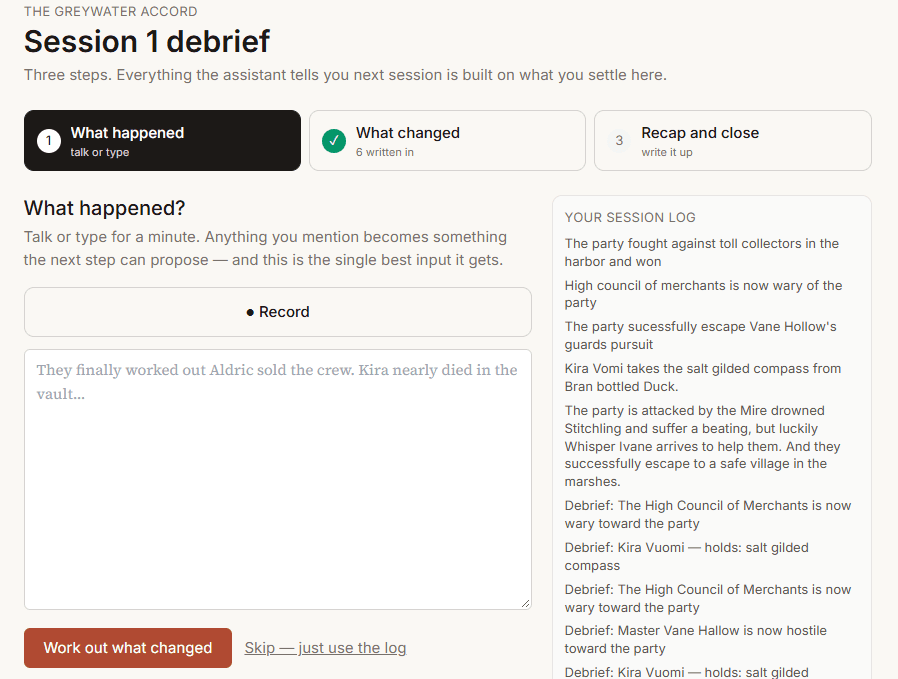
Step 1 — Open the debrief
From the dashboard, or from the session itself. A numbered stepper along the top shows how far through you are, so it is obvious what is left.
Step 2 — Talk for a minute or two
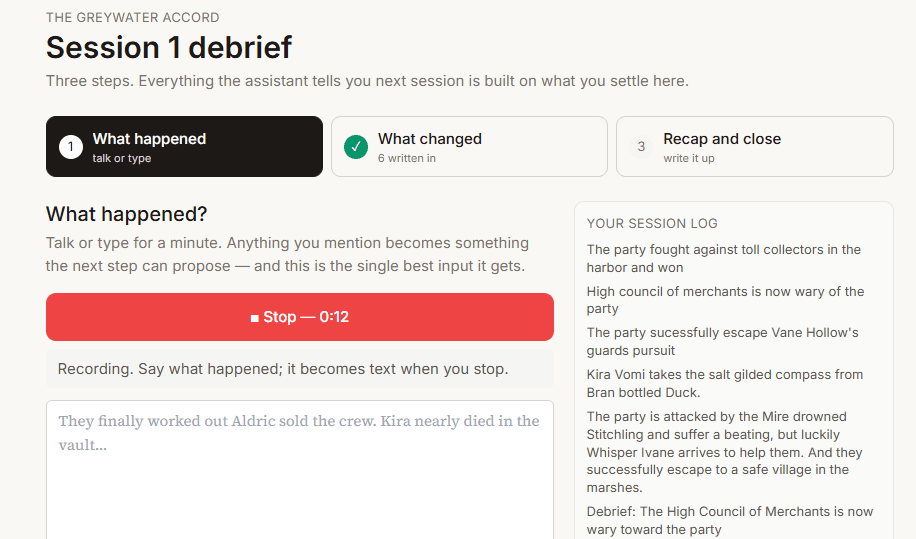
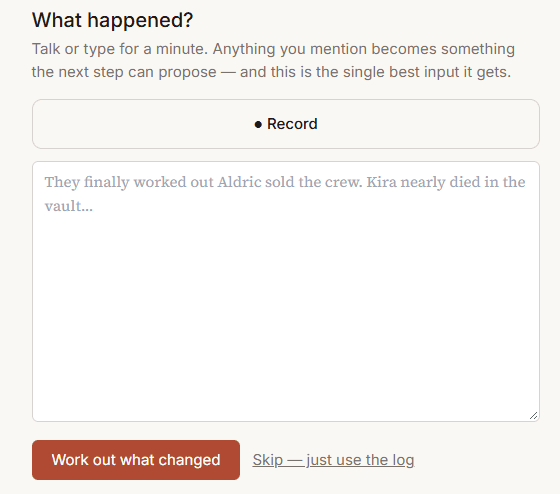
Press the microphone and say what happened, the way you would tell a friend who missed it. Rambling is fine. Trailing off is fine.
A real ramble sounds like this
“Right, so they finally cornered Aldric in the harbour office and he admitted the manifest was short. Kira took a page out of the ledger. Vell followed them back to the Salt and Whistle and I think he’s not actually on the take.”
Or type it, if you would rather. The transcription is only there to save you the typing.
Step 3 — Let it work out what changed
It reads what you said alongside the session log — the notes you jotted at the table, the scenes you played, the fights that happened — and comes back with a list of changes.
NPCs whose disposition moved. Threads that advanced. Facts that became true. Items that changed hands.
Step 4 — Review by how sure each one is
The changes are grouped by how certain they are, and the groups matter:
- Recorded — the app watched it happen. A scene you played, an item you handed over. No assistant involved at all.
- You said this — taken almost word for word from your own ramble.
- Inferred — dots joined from what you said. Worth a glance.
- You wrote this — anything you added by hand.
Read the inferred ones. Skim the rest, or accept a whole group at once. That is the entire review and it is usually two minutes.

Every change shows its evidence
This is the rule the feature is built on: nothing is proposed that cannot point at where it came from. A change with no quote is discarded before you ever see it, which turns “do not make things up” from an instruction into something mechanical.
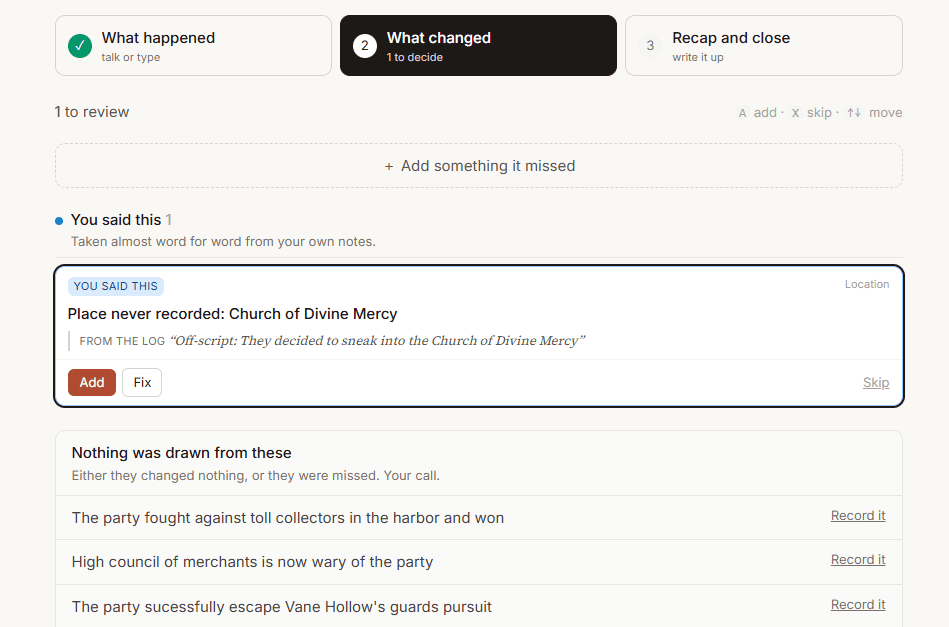
What a change looks like
● You said this
Aldric Fenn — disposition: wary → cooperative
from “he admitted the manifest was short”
Step 5 — Add anything it missed
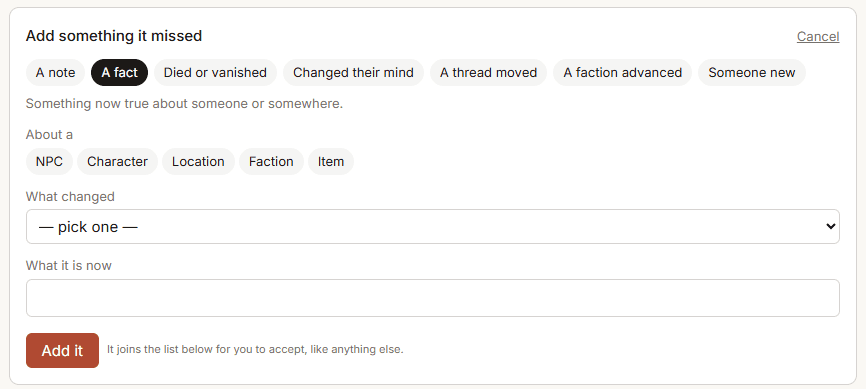
It will miss things. Add them: a note, a fact, a change of disposition, a thread moving, a faction clock turning, a new person who turned up unplanned.
Anything you add is marked as yours and treated as certain, because it is.
Step 6 — Write the recaps
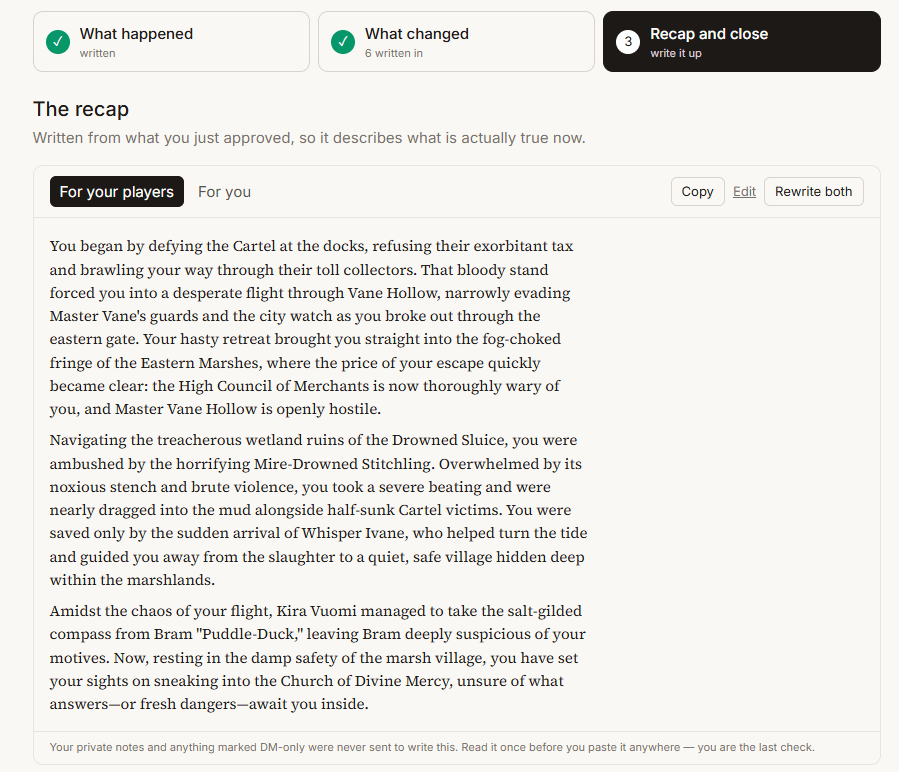
Two recaps. Yours keeps the machinery — what moved, what is now live, what you should be thinking about. Your players get a piece of prose in second person, past tense, with nothing marked DM-only anywhere in it.
Edit either. Then send the player one before anyone has left.
Step 7 — Close it
Closing the debrief writes everything you accepted into the codex and sets up the next session with the right number.
What it gives you back
A campaign that is still true after thirty sessions. The codex knows Aldric died in session 30, so it can tell you when you are about to say otherwise. Your threads know how long they have been quiet. Your players get a recap while they still care about it.
And you get the evening back, which was the point.
Questions
Questions people ask
No. Drop in a Notion or Obsidian export, a Word file, or paste anything at all. Yarnfold reads the people, places, factions and past sessions out of it and shows you every one before a word is written. If it is all in your head instead, answer nine questions and it builds from that.